

How to Keep Senior Dogs Mentally Stimulated at Home
Keeping a senior dog happy and healthy isn’t only about comfy beds and supplements — their brain needs exercise too. Mental stimulation reduces anxiety, supports cognitive health, and improves overall quality of life. Below are practical activities, product suggestions, and safety tips you can implement today.
Why Mental Stimulation Matters
- Reduces boredom & anxiety: Keeps destructive or repetitive behaviors down.
- Supports cognition: Regular mental tasks help slow age-related decline.
- Encourages gentle movement: Keeps them interested without overworking joints.
Gentle Games and Activities
- Scent work (nose games)
Hide treats in a towel, cups, or a snuffle mat. Begin with easy, obvious hides and gradually increase difficulty. - Puzzle feeders & slow-dispense toys
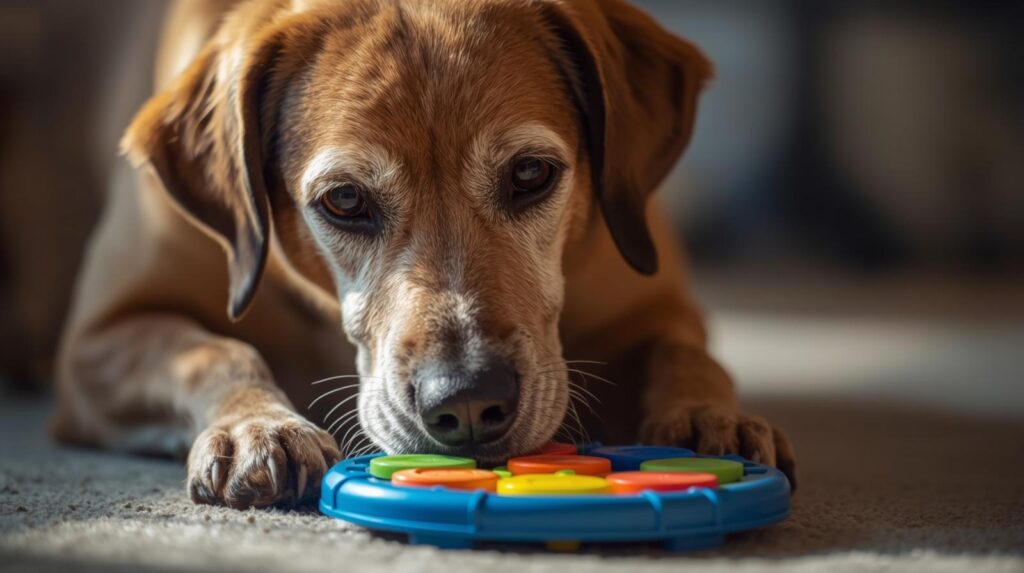
Choose puzzles with adjustable difficulty and wide openings so older teeth and jaws aren’t strained. - Short training sessions
3–5 minute sessions teaching or refreshing simple cues (sit, paw, touch) provide mental reward with minimal fatigue. - Food scattering & enrichment boxes
Scatter kibble on a blanket or hide treats in a box filled with crumpled paper. Supervise to prevent ingestion of non-food items.
Products That Tend to Work Well for Senior Dogs
How to Introduce New Activities Safely
- Go slow: Introduce one activity at a time.
- Keep sessions short: 3–7 minutes is usually enough.
- Watch body language: Stop if your dog appears stressed or tired.
- Adapt for mobility: Bring games to a seated or lying position when needed.
- Vet-check: If you notice sudden behavior shifts, consult your veterinarian.
Sample Daily Routine
- Morning: Potty walk + quick cue practice.
- Midday: Snuffle mat with half-meal kibble.
- Afternoon: Short scent game or puzzle toy for 3–5 minutes.
- Evening: Gentle massage and quiet bonding time.
Signs Your Dog Is Enjoying Mental Work
- Nudges you for the game, focused sniffing, calmer behavior afterward.
- If they lose interest quickly or show stress signals, step back and simplify the task.
Final Tips
Mix up activities across the week, keep sessions short and positive, and choose toys appropriate for your dog’s jaw strength and mobility. Mental exercise is an easy, high-return way to boost your senior dog’s happiness.