

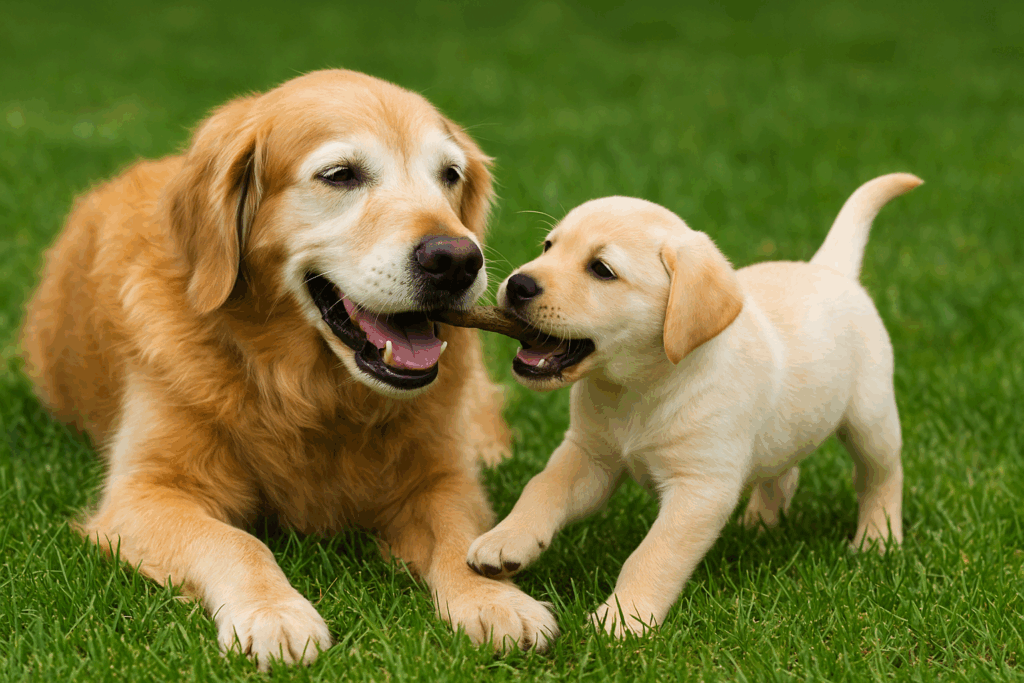
Adding a new puppy to your household can be exciting—but if you already have a senior dog, it takes a little extra care and patience to make sure both pets feel comfortable and safe. Older dogs often have established routines and limited tolerance for high-energy pups, so thoughtful introductions are key to harmony.
Here’s how to make the process positive for both your energetic new arrival and your wise old companion.
🏡 Step 1: Prepare the Home Before the First Meeting
Before your new puppy even arrives, set up a safe space for each dog.
Separate areas: Give your senior dog a quiet retreat—like a cozy orthopedic bed in a calm room—where they can rest without being disturbed.
Puppy-proofing: Make sure the puppy has their own area for play, food, and sleep.
Duplicate essentials: Separate food bowls, toys, and beds prevent resource guarding and reduce stress.
Check out our recommended orthopedic beds for senior dogs and soft puppy playpens to make setup easier and safer.
🐶 Step 2: Introduce Them on Neutral Ground
The first meeting should happen in a neutral area—like a park or your front yard—to avoid territorial behavior.
Keep both dogs on a leash and let them sniff from a distance at first.
Watch body language: wagging tails, relaxed posture, and curiosity are good signs. Growling or stiff movement means it’s time to give them space.
Keep sessions short and positive. Reward both dogs with praise and treats for calm behavior.
🛋️ Step 3: Bring the Puppy Home Gradually
Once they’ve met on neutral ground, bring them inside—but don’t expect instant friendship.
Allow short, supervised interactions at first.
Never force closeness or sharing toys right away.
Give your senior dog priority access to favorite spots or furniture—they’ve earned it!
Over time, they’ll naturally find a comfortable balance.
⏰ Step 4: Maintain Routine for Your Senior Dog
Older dogs thrive on routine. Keep their feeding times, walks, and naps consistent so they don’t feel neglected or displaced.
Meanwhile, give your puppy structured activities to burn off energy—this helps prevent them from pestering your senior dog too much.
Explore interactive toys for puppies or slow-feeder bowls to keep mealtime fun and challenging.
❤️ Step 5: Encourage Positive Experiences Together
The more pleasant moments your dog’s share, the stronger their bond will grow.
Try:
Short walks together
Parallel playtime in the yard
Joint training sessions with rewards for good behavior
Keep sessions upbeat and end them before either dog becomes tired or irritated.
⚠️ Step 6: Watch for Signs of Stress
Senior dogs can be sensitive to sudden changes. Look for:
Avoidance or hiding
Snapping, growling, or rigid body language
Loss of appetite or increased sleep
If tension continues, consider a trainer or behaviorist who specializes in multi-dog households.
🐾 Final Thoughts
Bringing a new puppy into a home with a senior dog is a balancing act of patience, respect, and supervision. With time and the right approach, your older dog can teach the puppy valuable manners—and the puppy can bring a fresh spark of joy to your senior’s golden years.
Tip for pet parents: A little preparation and the right gear—like calming aids, separate feeders, and comfy beds—can make all the difference.
👉 Check out our latest reviews and product guides on toddthebigdog.com for tools that help make multi-dog living peaceful and fun.