Thanksgiving-With-A-Dog
Thanksgiving is one of the riskiest days of the year for a dog. The whole house fills with rich, unfamiliar food, visitors come and go, and the usual routine disappears. Most of what lands on the table is fine for people and a problem for dogs, and some of the biggest dangers hide in dishes that look harmless, like stuffing with raisins or a dessert sweetened with something sugar-free.
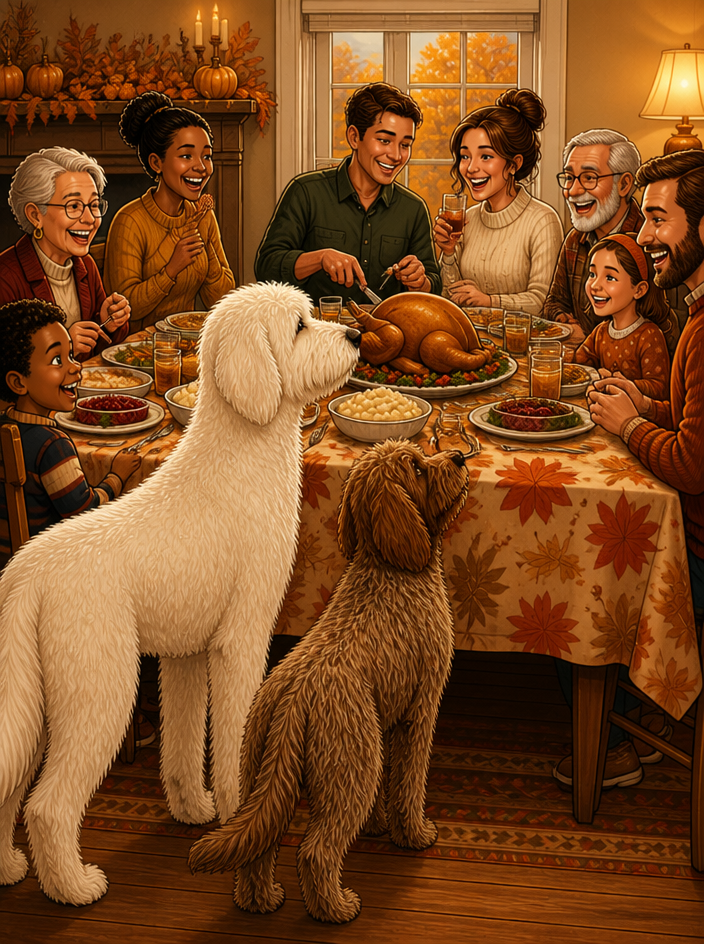
Thanksgiving Day With Dogs
Thanksgiving With a Big Dog: What to Skip and What to Share
Oct 30, 2026 
Thanksgiving is one of the riskiest days of the year for a
dog. The whole house fills with rich, unfamiliar food, visitors come and go,
and the usual routine disappears. Most of what lands on the table is fine for
people and a problem for dogs, and some of the biggest dangers hide in dishes
that look harmless, like stuffing with raisins or a dessert sweetened with
something sugar-free.
I share my home with two big dogs, Todd and Ellie, and this
is the guide I want every guest at the table to read. Big dogs make the day
harder in a few ways. They can reach the counter, they can finish a plate of
scraps in seconds, and a mistake with a large dog can still mean an emergency
trip to the vet.
This guide covers the foods to never feed your dog, the ones
that are okay to share and how to prepare them, how much is too much, how to
keep the kitchen and trash safe, how to keep your dog calm when guests arrive,
and what to do if your dog gets into something. The graphics are made to
screenshot or print for the fridge.
One note before we start: this is general information from a
dog owner's point of view, not veterinary advice. Every dog is different, so
ask your own vet if your dog has allergies, a sensitive stomach, or a health
condition.
The short version
If you remember nothing else, remember this: plain,
boneless, fully cooked turkey and plain vegetables are okay in small amounts,
and almost everything else on the table is better left for people.
• Never feed:
chocolate, anything with xylitol, grapes and raisins, onions and garlic, raw yeast dough, alcohol, turkey bones, and nuts such as macadamia.
• Fine in small amounts:
plain turkey meat, plaingreen beans, plain sweet potato, plain pumpkin puree, plain potato, and apple
slices without the core.
• Skip the rest:
turkey skin, gravy, stuffing, casseroles, buttery mashed potatoes, and anything sweet.
The chart below puts it all on one page.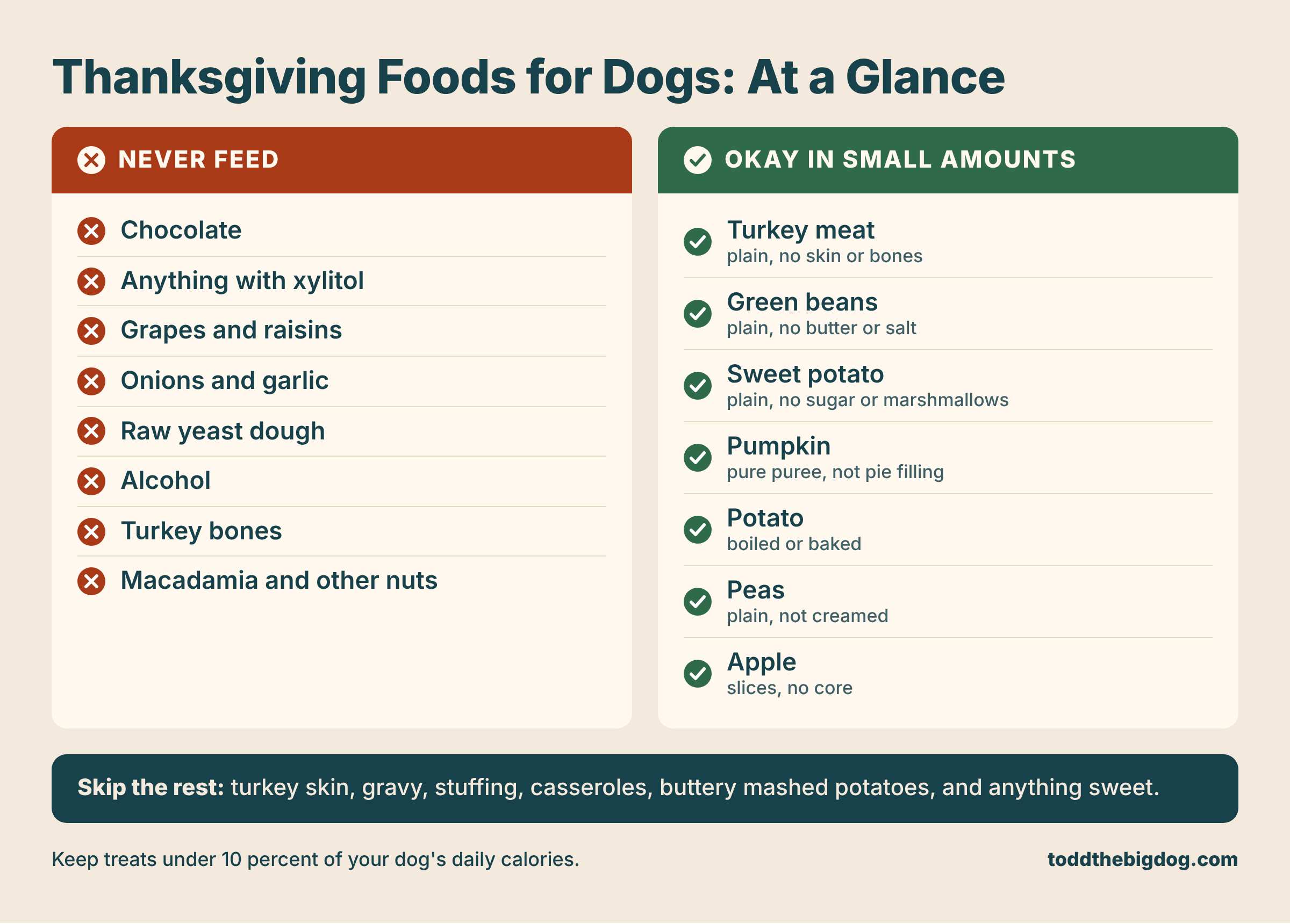
Never feed these
The foods below can make a dog seriously ill, and several
are common at Thanksgiving. Many are not obvious, because they are mixed into
dishes instead of sitting on the plate by themselves.
• Chocolate.
Pet Poison Helpline says it gets more calls about chocolate than any other toxin. The ASPCA lists vomiting, diarrhea, panting, excessive thirst and urination, hyperactivity, abnormal heart rhythm,
tremors, seizures, and death, and notes that darker chocolate carries more
risk. Watch for brownies, cocoa-based desserts, and candy that guests bring.
• Xylitol.
This sweetener turns up in gum, candy, pudding, sauces, jams, baked goods, and toothpaste. In dogs it can cause dangerously low blood sugar and liver damage, and the ASPCA says liver damage
can show up within 12 to 24 hours. Check the label on anything sugar-free, and
keep guests' bags off the floor, since gum travels in purses.
• Grapes and raisins.
The ASPCA says they can cause kidney damage, and tartaric acid is the suspected toxin. Pet Poison
Helpline points out that stuffing is a common place for them to hide, where
they combine with other risky ingredients like onion.
• Onions, garlic, and chives.
These can irritate the stomach and damage red blood cells, which can lead to anemia, and the risk
depends on how much a dog eats. They are in stuffing, gravy, casseroles, mashed
potatoes, and bouillon, so a bite of "plain-looking" side dish is not always plain.
• Bouillon and very salty food.
The ASPCA warnsthat bouillon cubes, used in stock and gravy, are high in sodium and can cause
stomach problems and even seizures. Too much salt can cause extreme thirst and
urination, vomiting, diarrhea, tremors, and seizures.
• Raw yeast dough.
Rising dough can expand in the stomach and release gas, and the yeast also produces alcohol. The ASPCA warns the bloating can be painful and may twist the stomach, which is a
life-threatening emergency. Never leave rolls rising on a counter or low table.
• Alcohol.
It is absorbed quickly, and the ASPCA lists vomiting, diarrhea, incoordination, difficulty breathing, tremors, coma, and death. Keep glasses and cocktails up high, and empty them before guests
leave the table.
• Turkey bones.
The ASPCA calls poultry bones a choking hazard, and the AKC notes they can splinter. Bones can also injure or block the digestive tract, and a blockage may need surgery.
• Raw or undercooked turkey and raw eggs in batter.
Both can carry salmonella, so keep your dog away from the cutting board and the mixing bowl.
• Macadamia nuts and other nuts.
Macadamias can cause weakness, wobbling, vomiting, tremors, and overheating, usually within 12
hours. Almonds, pecans, and walnuts are high in fat and can cause vomiting,
diarrhea, and in some pets pancreatitis, so pecan pie is a double problem.
If you only have time to learn a few, learn the first three:
chocolate, xylitol, and grapes and raisins. They are the ones most likely to be
hiding in a dish nobody thought to mention.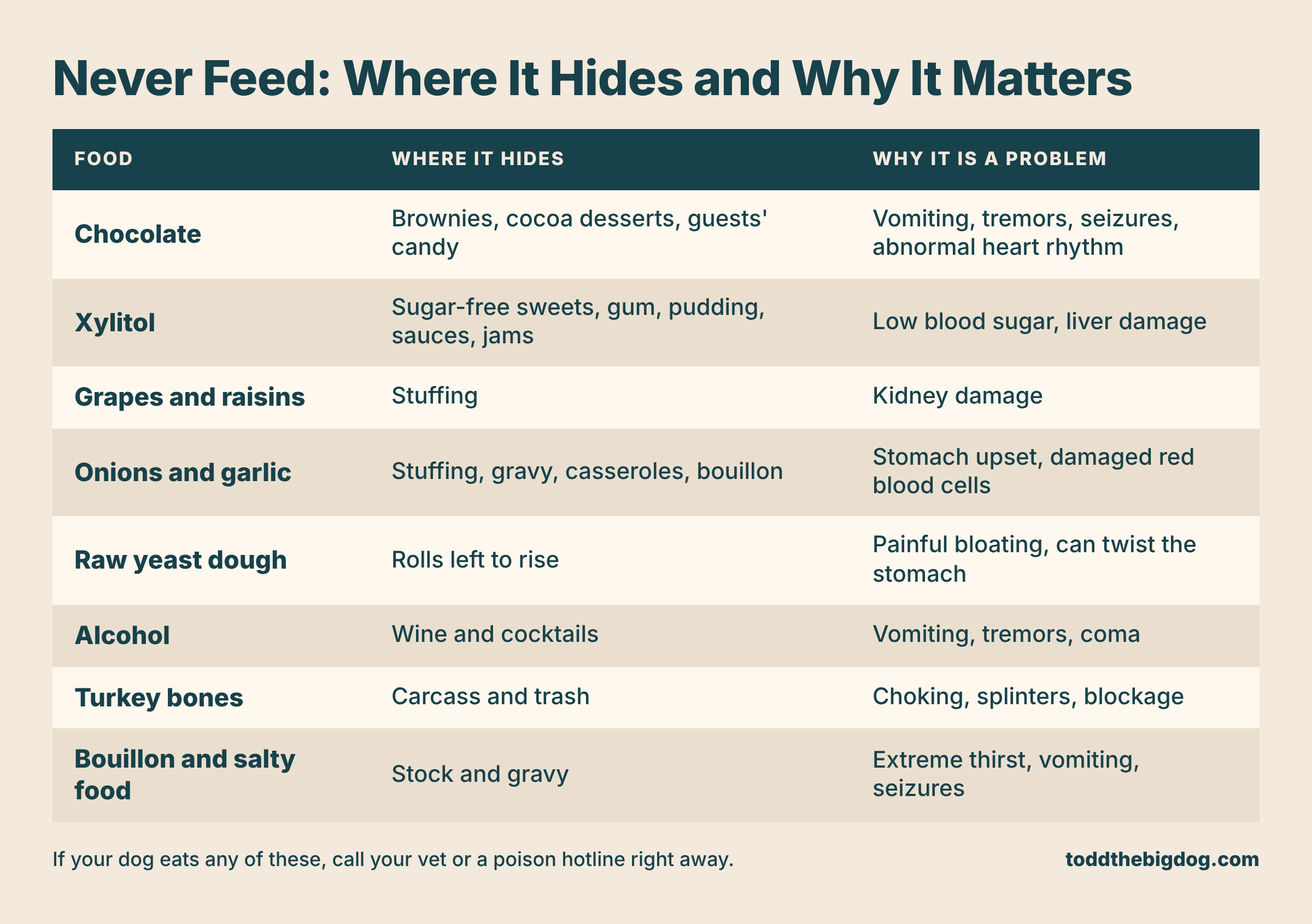
Fatty and rich foods: the hidden problem
Not everything that makes a dog sick is a poison. A lot of Thanksgiving trouble comes from fat,
and fat does not look dangerous.
The AKC says turkey skin and gravy are fatty and often
coated in butter or oil, which risks pancreatitis. It lists stuffing,
casseroles, mashed potatoes, and creamed peas as typically made with fats,
dairy, onion, or garlic that can trigger pancreatitis or an upset stomach, and
it also flags ham and other fatty or spiced foods. Pancreatitis is a painful
inflammation of the pancreas, and vomiting, a sore belly, and refusing food are
warning signs worth a call to your vet.
Dairy is another quiet culprit. The ASPCA notes that pets
have little lactase, the enzyme that breaks down milk sugar, so cream, butter,
and cheese can cause diarrhea or other digestive upset. That covers the cream
in mashed potatoes and the cheese in casseroles.
The rule of thumb is simple: if it is glossy, buttery,
creamy, or seasoned, it is for people. This is also where well-meaning guests
cause the most trouble, because a single dropped bite of skin or a spoonful of
gravy feels harmless.
One gray area is gravy. The ASPCA suggests a small drizzle
on your dog's regular meal as long as it has no bouillon, while the AKC lists
gravy as a food to avoid because it is fatty and seasoned. Since the two
sources disagree, the safest choice is to skip it, especially for a dog with a
sensitive stomach.
What is okay to share, and how to prepare it
You can include your dog in the day without risk if you
stick to plain food, served in small portions. "Plain" means no
butter, salt, oil, sugar, onion, garlic, or seasoning of any kind.
• Turkey meat.
Plain, boneless, fully cooked meat is fine. The AKC says it is okay "as long as it has not been prepared with any seasoning," and that the skin and bones should be skipped.
• Green beans.
Serve them plain, without butter or salt. The AKC suggests setting aside a separate portion for a dog who loves them, before you season the rest.
• Sweet potato.
Plain mashed or baked sweet potato is fine. Avoid the versions with brown sugar, marshmallows, or maple syrup, which are the ones most people make.
• Pumpkin.
Pure pumpkin puree is fine and can help digestion. Check that the can says pumpkin, not pie filling, because pie filling is sweetened and spiced.
• Potatoes.
Boiled or baked potato is okay. Keep the butter-and-cream mashed potatoes, especially any made with onion or garlic, for people.
• Peas.
Plain peas are fine in moderation. Creamed peas are not.
• Apple.
Fresh slices are fine, but cut around the core, because large amounts of apple seeds can be toxic. Apple pie is for people.
The ASPCA also says a small bite of boneless, fully cooked
turkey, and sweet potato or green beans mixed into your dog's usual dinner,
make a good holiday treat. That is a useful idea for a big dog: adding a
spoonful of plain vegetables to the regular bowl feels special without changing
the main meal.
Set aside your dog's portion before cooking is finished, so
you are never tempted to hand over a bite from the seasoned dish. If a guest
wants to share, give them the dog's plate to hand out, not a fork from their
own.
Fruits and vegetables are generally good choices because
they are usually low in protein, fat, sodium, and phosphorus, according to UC
Davis. Still, if your dog has a medical condition, ask your vet which of these
foods are right for them.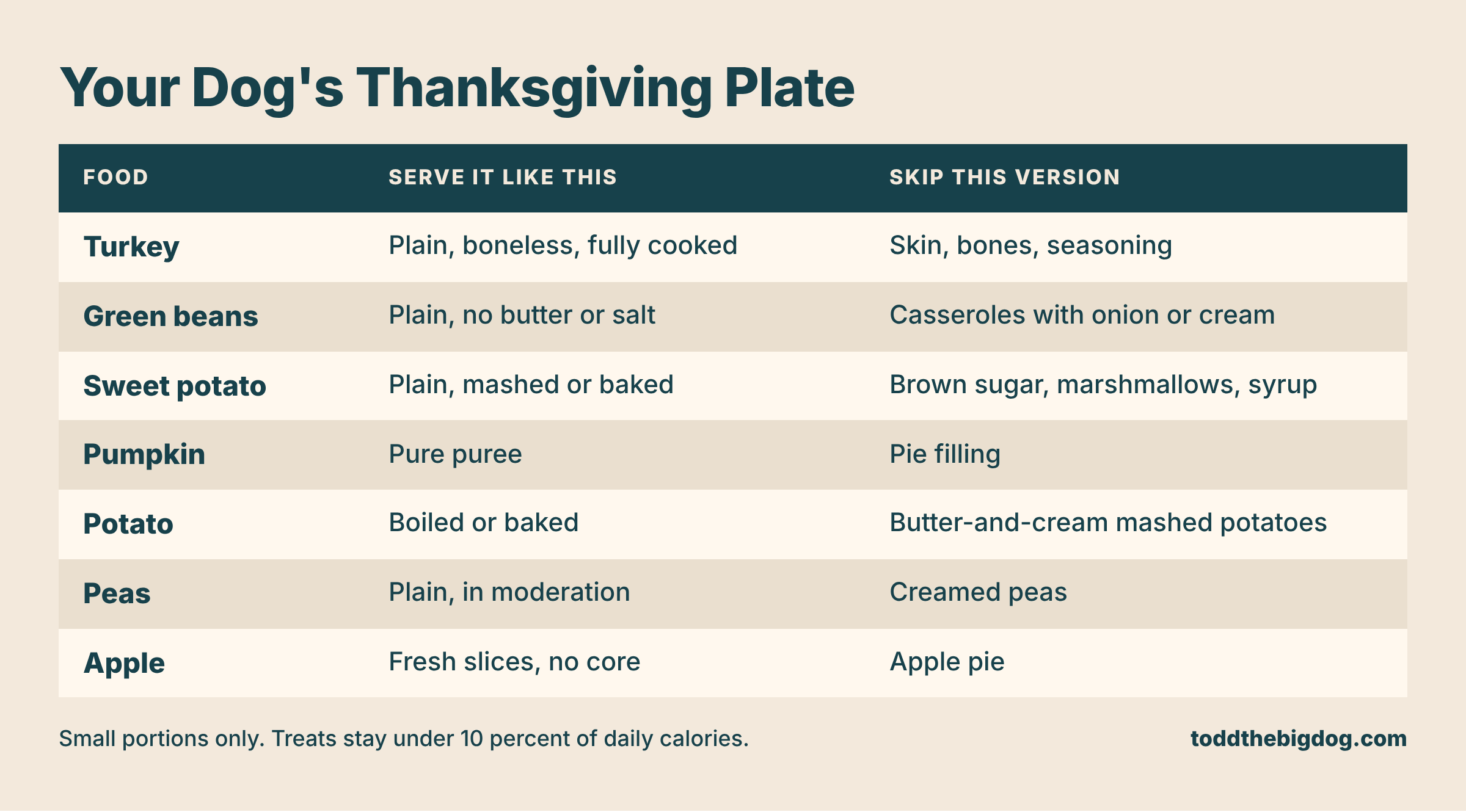
How much is too much
Even safe foods can cause trouble in large amounts, so the
portion matters as much as the food.
UC Davis's veterinary nutrition team says treats and extra
food should not make up more than 10 percent of a dog's daily calories, and the
rest should come from a complete and balanced diet. For a dog eating 100
calories a day, that is 10 calories of treats. Their examples are a quarter cup
of chopped raw apple at about 14 to 16 calories and half a cup of boiled green
beans at about 22 calories.
A big dog eats more than a small one, so 10 percent is a
larger amount in absolute terms, but it is still a limit and not a target. It
covers every treat across the whole day, including the ones guests slip under
the table. Ask your vet for your dog's daily calorie number so you know what 10
percent really is.
Big dogs have a risk that small dogs mostly do not.
Cornell's veterinary college says large, deep-chested dogs are most at risk of
bloat, formally called GDV, in which the stomach swells and can twist. Cornell
lists these risk factors:
• Eating too quickly
• One large meal instead of several smaller ones
• Exercising soon after eating
• Using a raised food bowl
Bloat is an emergency, and Cornell says it is fatal without
immediate treatment, though survival is above 80 percent with medical and
surgical care. The warning signs are unproductive retching, heavy drooling,
panting, a swollen or painful belly, restlessness or pacing, pale gums,
weakness or collapse, and a "praying" position with the front legs
forward and the chest low.
On a holiday, that means a few simple habits. Keep your
dog's regular meals on schedule rather than skipping breakfast to "save
room," and offer a smaller portion at a time. Make sure your dog is not
gulping a whole plate of leftovers at once. Keep a quiet stretch after any big
meal before any hard play. If you see the signs above, treat it as an emergency
and go to the vet right away.
Keep the kitchen, trash, and table safe
Most Thanksgiving accidents happen in the gaps: the trash
bag by the back door, the counter nobody is watching, the plate left at the end
of the table.
• Trash.
The ASPCA says garbage can hold bones, chocolate, onions, and other hazards, and recommends emptying it through the day or keeping pets out of the trash area. The AKC adds that you should secure the trash after the meal so your dog cannot get into it. For a big dog, a trash
can with a lid is not enough, so take the bag outside to a closed bin.
• Counters.
A tall dog can reach what looks safe. Keep raw turkey, rising dough, batter, butter, and desserts well back from the edge, and use a baby gate or a closed door to keep your dog out of the kitchen
while you cook.
• Guests and kids.
The AKC says to make sure guests and small children know to ask you before sharing food with your dog. A friendly sign by the table or a quick word at the door works well.
• Guests' belongings.
The ASPCA says guests' medications are a common source of poisonings. Ask visitors to keep bags,
coats, and medicine out of your dog's reach.
• Plants and decorations.
Floral arrangements and plants can be dangerous, and the ASPCA points to its toxic plants list so you
can check a centerpiece before you set it down.
• Leftovers.
Wrap and store food right after the meal. Do not leave plates on low tables, and put the carcass in the outside trash.
It also helps to think about doors. Visitors arrive and
leave all day, and a dog that dashes out an open door is a different emergency.
Keep your dog's collar and ID tags on, make sure the microchip information is
current, and put your dog in a room behind a closed door during busy arrivals.
A calm Thanksgiving plan for your dog
A tired, settled dog begs less, steals less, and stays out
of trouble. A little planning keeps the day calmer for everyone.
• Exercise first.
Take a long walk before guests arrive and before the meal. A tired dog rests, and you do not want to exercise your dog hard right after eating.
• Keep the routine.
Feed your dog's regular meals at their normal times, and do not skip a meal to "save room" for
scraps.
• Give your dog a quiet room.
The ASPCA notes that a crowd can overwhelm pets and suggests a quiet space with blankets on the
floor or an open bedroom door. Put water, a bed, and a chew or food puzzle in
there, so your dog has something to do.
• Make a dog plate ahead of time.
The AKC suggests setting aside plain dog-safe food for your dog instead of sharing scraps. A spoonful each of plain turkey, green beans, and sweet potato is plenty for most dogs. Use the numbers from your vet to keep it inside the 10 percent limit.
• Give guests a job.
If someone wants to feed your dog, hand them the dog plate or a measured treat, and tell them everything else is off limits.
• Stay ahead of the cleanup.
The most dangerous moment is often after the meal, when everyone is tired and food is still out.
Clear plates and secure the trash before you sit down to relax.
Two or three small habits are enough. A walk, a quiet room,
and a plate set aside will do more than any list of rules.
If your dog eats something it shouldn't
Act fast, stay calm, and call before you wait for symptoms.
Some problems, like liver damage from xylitol, can take 12 to 24 hours to show up.
1. Take the food and wrapper away so your dog
cannot eat more, and keep the packaging.
2. Note what, how much, and when. Write down the
food, the amount, the time, and your dog's weight.
3. Call your vet or a poison hotline right away.
4. Do not make your dog vomit unless a vet or
poison expert tells you to.
5. Follow their instructions and go to an emergency
clinic if they say so.
Two 24-hour poison hotlines are staffed by veterinary
experts:
• ASPCA Animal Poison Control Center:
(888) 426-4435
The ASPCA says a consultation fee may apply.
• Pet Poison Helpline:
(855) 764-7661
The service lists a fee of $85 per incident, which covers follow-up consultations for that case.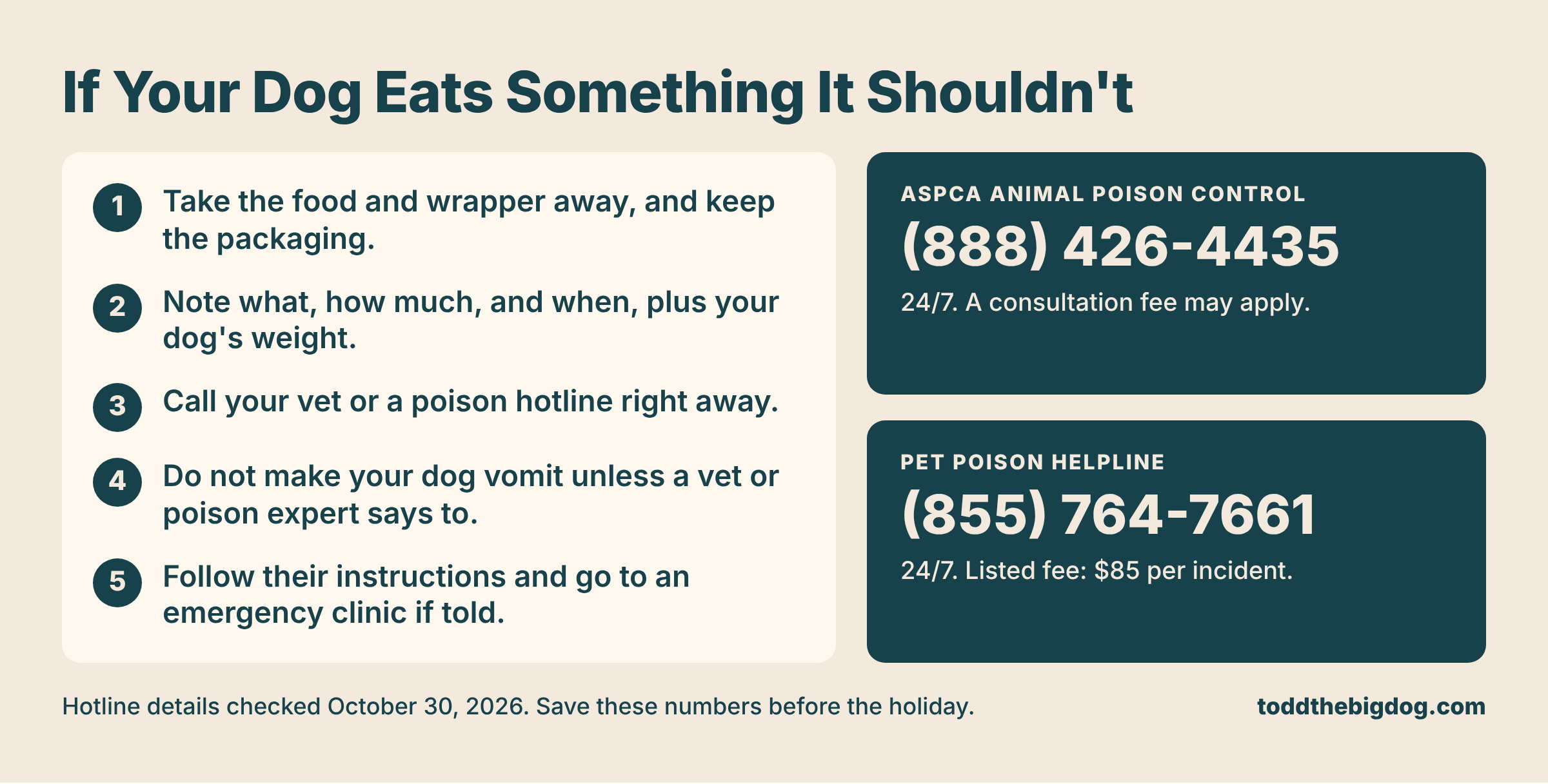
Call right away if you see repeated vomiting, unproductive
retching, a swollen belly, tremors, weakness, collapse, or extreme
restlessness. Holiday clinics may have reduced hours, so save the numbers for
your nearest emergency vet before the day.
If you live on the coast, plan for distance. Ocean Shores
has no emergency vet in town, so the nearest emergency care is a drive to
Aberdeen, Brady, or Olympia, depending on the time of day and the emergency.
Save the clinic numbers in your phone, call ahead to confirm hours, and know
your route before you need it.
Quick checklist before the big day
• Put the poison hotline numbers and your emergency
vet's number in your phone
• Check every dish for onion, garlic, raisins, grapes,
xylitol, and chocolate
• Set aside your dog's plain portion before seasoning
the food
• Walk your dog before guests arrive
• Set up a quiet room with water and something to chew
• Tell guests and kids to ask before feeding the dog
• Keep dough, alcohol, desserts, and bags out of reach
• Take the trash outside to a closed bin
• Keep your dog's ID tags on and microchip information
current
• Keep your dog's meals on schedule and skip the
"treat binge"
Sources
ASPCA:
Thanksgiving safety tips
ASPCA:
People foods to avoid feeding your pets
ASPCA: Animal
Poison Control
AKC:
Thanksgiving foods for dogs
AKC:
Thanksgiving tips for dogs
Pet
Poison Helpline: Holiday pie of pet dangers
UC Davis School of
Veterinary Medicine: Treat guidelines for dogs
Cornell
University College of Veterinary Medicine: Gastric dilatation volvulus (GDV or
bloat)
Hotline numbers, fees, and guidance were checked on October
30, 2026 and can change. When in doubt, ask your own veterinarian.