The Complete Guide to Foods Dogs Can and Cannot Eat
A quick guide to foods that are okay for dogs to eat, and what to stay away from.
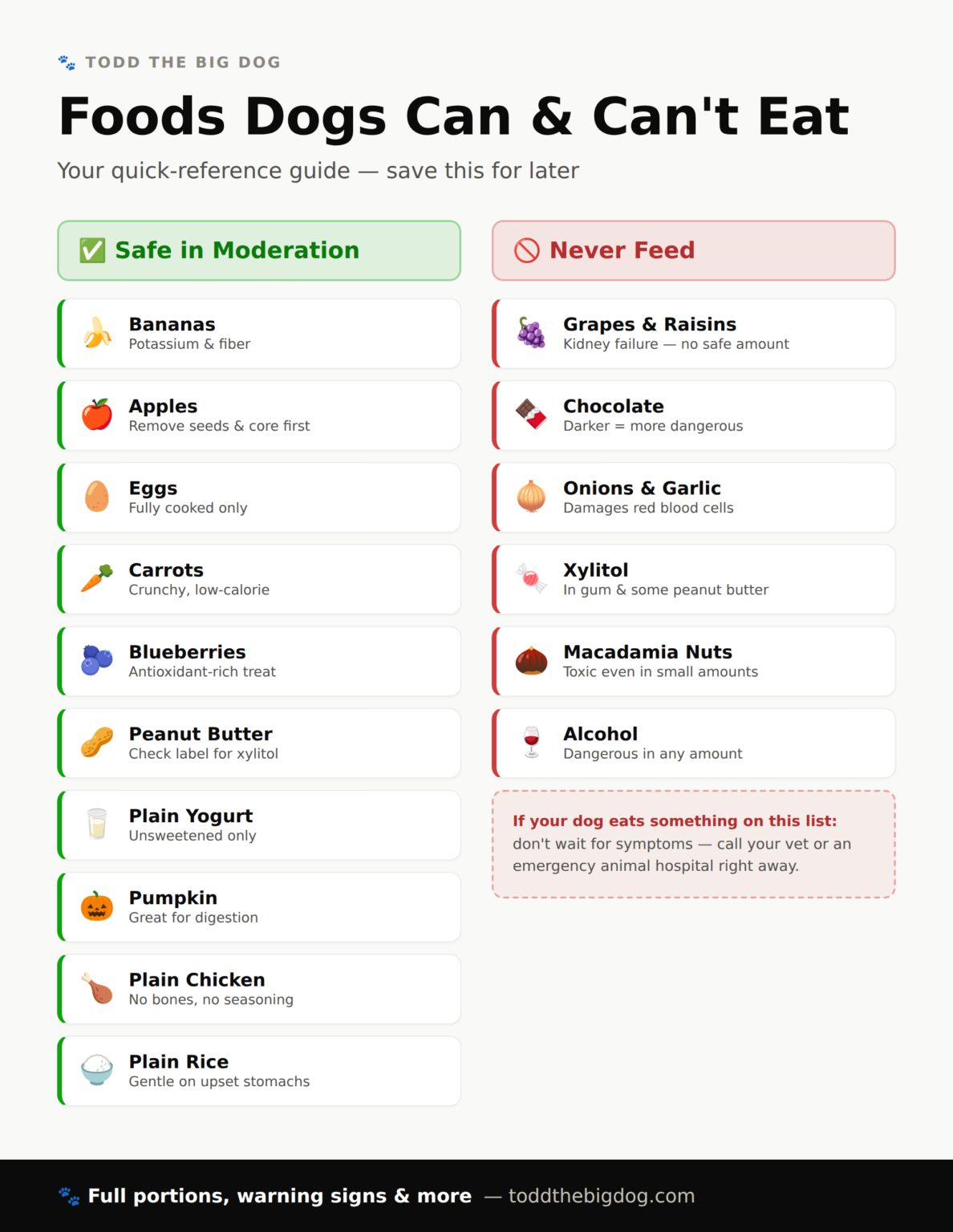
Foods Dogs Can & Can't Eat
We've written about individual foods before — can dogs eat
this, can dogs eat that — but the truth is, food questions rarely come one at a time. You're standing in the kitchen wondering if it's safe to toss your dog a piece of whatever's on the counter, and you need one place with the real
answer, not five separate articles. So we combined everything we know into a single, complete guide: what's genuinely safe, what's dangerous and why, how much is too much, and what to do if your dog eats something they shouldn't have.
📋 Quick Reference
Generally safe in moderation: bananas, apples (no seeds/core), fully cooked eggs, carrots, blueberries, plain peanut butter
(xylitol-free), plain yogurt, plain pumpkin, plain cooked chicken, plain white
rice.
Never feed — toxic: grapes and raisins, chocolate,
onions and garlic, xylitol, macadamia nuts, alcohol.
✅ Safe Foods (In Moderation)
🍌 Bananas
Potassium-rich, high in fiber, and low in sodium — a
genuinely healthy treat in small amounts. Guideline: small dogs, 2–3 slices;
large dogs, about half a banana. Bananas are also high in natural sugar, so
keep them occasional rather than daily.
🍎 Apples
High in fiber, low in fat, and supportive of digestion. The
catch is preparation: always remove the seeds (they contain small amounts of cyanide-producing compounds and are genuinely risky in large quantities) and the core, then cut into manageable slices. Feed in moderation — too much, even prepared correctly, can upset a dog's stomach.
🥚 Eggs
One of the best and most affordable protein sources for
dogs, providing high-quality protein plus vitamins A, B12, and riboflavin that
support coat and skin health. Eggs must be fully cooked — no butter, oil, salt, or seasoning — scrambled or boiled work best. Guideline: smaller dogs, half to one egg; larger dogs, up to two. Raw eggs carry a real salmonella risk, and rare egg allergies do exist, so introduce slowly the first time.
🥕 Carrots
High in fiber and vitamin A, and the crunch actually helps
reduce plaque buildup, which makes carrots a solid low-calorie option for dogs who need to watch their weight. Serve raw in small pieces or lightly steamed for older dogs with dental issues.
🫐 Blueberries
Antioxidant-rich and low in calories, which makes them a
great choice for training treats — you can hand out a lot of them without
overdoing calories. Fresh or frozen both work.
🥜 Peanut Butter
Plain, unsalted peanut butter is a favorite for good reason
— but this is the one where reading the label genuinely matters. Some brands sweeten peanut butter with xylitol, which is toxic to dogs (see below). Always double-check the ingredient list before it becomes a regular treat.
🥛 Plain Yogurt
Plain, unsweetened yogurt with no artificial sweeteners is a
perfectly fine snack for most dogs. Some dogs are sensitive to dairy, so start with a small amount and watch for any digestive upset.
🎃 Pumpkin (Plain)
Plain canned or cooked pumpkin (not pie filling, which has
added sugar and spices) is high in fiber and genuinely useful for regulating
digestion — vets commonly recommend a spoonful for dogs dealing with mild constipation or diarrhea.
🍗 Plain Cooked Chicken
High in protein and easy to digest, which makes it a go-to
for dogs recovering from an upset stomach or illness. Boil or bake without oil, salt, butter, or seasoning, and remove all bones — cooked bones can splinter and are a genuine choking and internal injury risk.
🍚 Plain White Rice
Gentle and easy to digest, plain white rice paired with
plain boiled chicken is a classic bland-diet combination vets recommend for
dogs with an upset stomach or recovering from diarrhea.
One rule that applies to all of the above: treats and
human foods, even the safe ones, should never make up more than about 10% of your dog's daily calories. "Safe" doesn't mean "unlimited."
🚫 Toxic Foods — Never
Feed These
🍇 Grapes and Raisins
No — dogs should never eat grapes or raisins, and there is
no known safe amount. Even a single grape can be toxic and potentially
life-threatening. The exact mechanism is still not fully understood, but grapes and raisins can cause sudden kidney failure in dogs, and reactions are unpredictable — some dogs get sick from one grape while others tolerate more before showing symptoms. Watch for vomiting, lethargy, loss of appetite, dehydration, and reduced urination, which can appear anywhere from a few hours to 24 hours after ingestion. Raisins are even more concentrated than grapes and equally dangerous. If your dog eats any amount, call your vet immediately — don't wait for symptoms.
🍫 Chocolate
Chocolate contains methylxanthines — stimulant compounds
that disrupt a dog's metabolic process. Even small amounts can cause vomiting and diarrhea; larger amounts can trigger seizures and can be fatal. Darker, more concentrated chocolate (baking chocolate, dark chocolate, cocoa powder) is more dangerous than milk chocolate for the same weight, since it contains more of the toxic compound. Any chocolate ingestion is worth a call to your vet.
🧅 Onions and Garlic
Onions, garlic, leeks, and chives all contain sulfur compounds that cause oxidative damage to a dog's red blood cells, leading to a serious form of anemia. The dangerous part is the delay — damage begins within 24 hours, but visible symptoms (lethargy, loss of appetite, rapid breathing and
heart rate, weakness, pale or yellowish gums, dark urine) often don't show up for 3 to 5 days. Garlic is 3 to 5 times more toxic than onion pound for pound, and concentrated forms like onion powder or dehydrated flakes are riskier than fresh. If you suspect your dog got into either, don't wait for symptoms to appear before calling your vet.
🍬 Xylitol
This sugar substitute, found in sugar-free gum, candy, some
peanut butters, baked goods, and even some toothpaste and liquid medications, is one of the most dangerous foods on this list. In dogs, xylitol triggers a rapid insulin release that causes severe hypoglycemia (low blood sugar) — symptoms can appear within 30 minutes or be delayed up to 18 hours depending on the product. It can also cause liver failure through a separate mechanism, sometimes without hypoglycemia occurring first, which makes it hard to catch early. Watch for vomiting, weakness, wobbliness, seizures, or collapse. This is a genuine emergency — get to a vet immediately, and always check labels on anything sweetened before it's anywhere near your dog.
🌰 Macadamia Nuts
One of the most poisonous foods for dogs relative to how
small an amount it takes. Symptoms include vomiting, elevated temperature,
weakness or inability to walk (especially in the hind legs), and tremors,
typically appearing within 12 hours. Keep macadamia nuts and anything baked with them completely out of reach.
🍷 Alcohol
Extremely dangerous, even in small amounts relative to a
dog's size. Alcohol affects a dog's central nervous system much more severely than it does ours, and can cause dangerous drops in blood sugar, blood pressure, and body temperature. Keep alcoholic drinks, unbaked dough (which continues to produce alcohol as it "rises" in a dog's warm stomach), and anything alcohol-based well out of reach.
🆘 If Your Dog Eats
Something Toxic
Don't wait for symptoms.
With several of the foods above, real damage happens before any visible signs show up.
Call your vet or an emergency animal hospital immediately.
If it's after hours, the ASPCA Animal Poison Control Center —
(888) 426 4435
— is available 24/7 (a consultation fee may apply).
Know roughly what and how much
your dog ate, and when — it genuinely helps whoever's treating them.
Don't try to induce vomiting yourself
unless a vet specifically tells you to and how — for some substances, this can make things worse.
This guide is for general information and isn't a substitute for veterinary advice. Every dog is different — if your dog has a medical condition, allergy, or you're introducing any new food, check with your vet first. If you suspect your dog has eaten something toxic, contact your veterinarian or an emergency animal hospital immediately.